
Bird Flu, 20 Years Later
Dear Reader,
Across the world, avian influenza (or bird flu) has been wreaking havoc on animals. In Chile alone, as of May 11th, 2026, more than 700,000 birds had either died from the virus or been culled as part of eradication measures.
Growing up, my father owned a poultry farm, and my brothers and I knew its workings inside out. It was not mechanised then, and much of the work — picking up eggs, feeding the birds, cleaning sheds — was physically strenuous. But what made our days truly depressing was when the birds contracted avian influenza and perished by the hundreds.
At the time, I never imagined the virus would one day threaten wildlife far beyond poultry farms.
Decades later, when I read reports about avian influenza, my mind goes back to those days. The virus has expanded its reach and is increasingly being reported among big cats in zoos across Thailand, Vietnam, and India.
In a first documented fatal outbreak among captive big cats in India, three tigers and a sub-adult leopard at Nagpur’s Gorewada Rescue Centre succumbed to the H5N1 virus (the highly pathogenic strain of avian influenza) in early 2025. The incident raised alarm because it highlighted the virus’s growing ability to cross species barriers and infect mammals. A few years earlier, more than 140 tigers reportedly died from the virus in Thailand. Most recently, in 2024, 47 tigers died in Vietnamese zoos due to H5N1.
The outbreak also exposed how poorly prepared many zoos and rescue centres across South and Southeast Asia are to handle such infections. In January 2026, the FAO warned that the “ecological expansion” of highly pathogenic avian influenza was affecting new species and ecosystems across Southeast Asia, prompting governments to strengthen wildlife monitoring, cross-border surveillance, and zoo biosecurity preparedness.
Even though disease diagnostic laboratories exist across Indian states, only one agency — ICAR-NIHSAD in Bhopal — provides confirmatory diagnostic services for avian influenza to all states and union territories, according to a 2021 report by the Parliamentary Standing Committee on Fisheries, Animal Husbandry and Dairying.
“Zoo authorities should increase monitoring of poultry farms and ensure that meat supplied to big cats comes from registered and legitimate sources. However, this is often not followed,” said Aniruddha Belsare, assistant professor of disease ecology at Auburn University.
Experts say that the only solution is to prevent exposure. “Most zoos today are zoological parks with large open campuses where migratory birds frequently visit. The larger the campus, the greater the risk. Even bird aviaries — large mesh enclosures designed for captive birds to fly — are vulnerable because wild birds from outside can still roost on the mesh,” Dr. N. V. K. Ashraf, Chief Veterinary Officer and Vice President, Wildlife Trust of India.
Warmly,
Laasya Shekhar
Managing Editor
👀 ICYMI
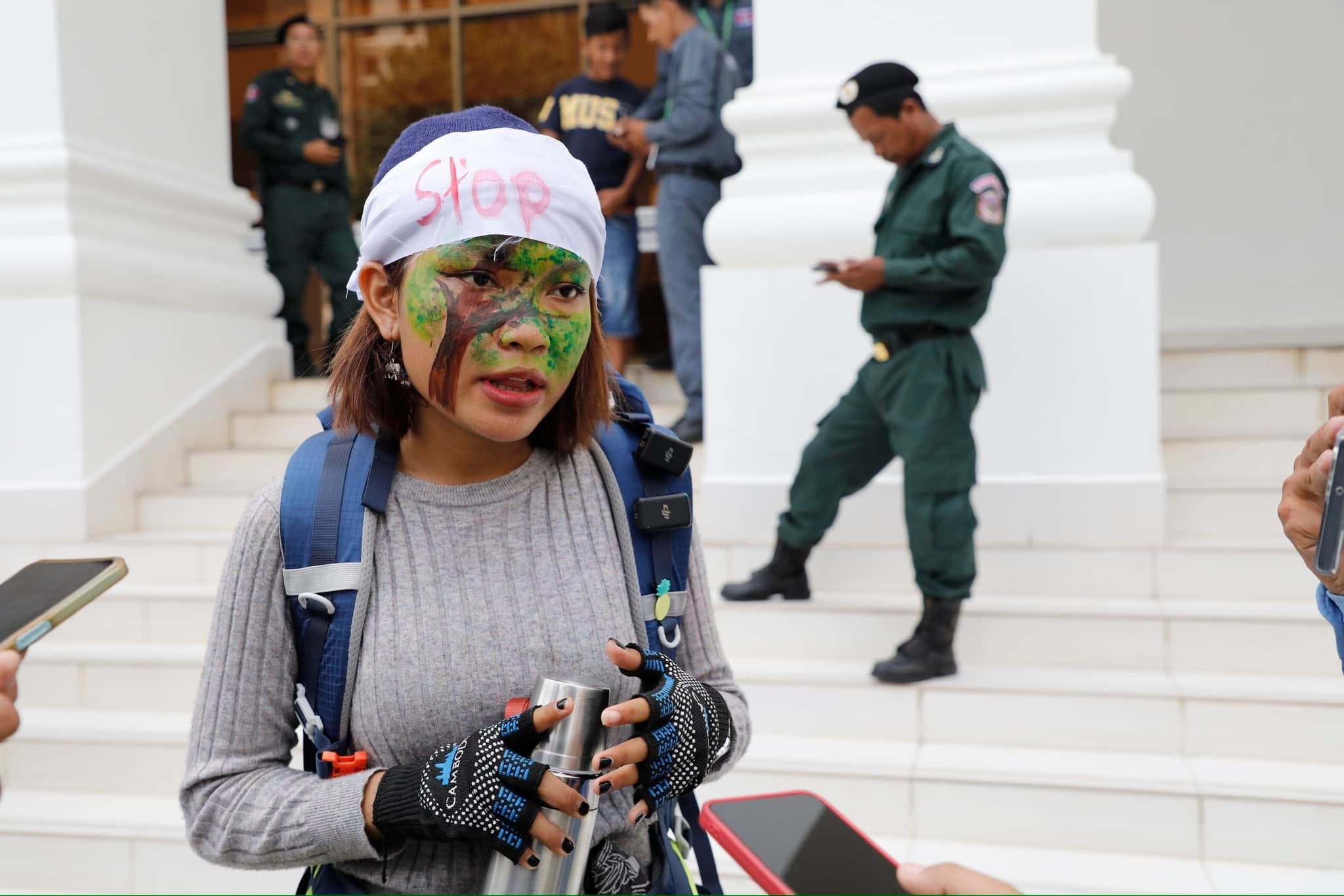
In Cambodia, the State Claims Forests. But People Push Back
What happens when Cambodian activists stage a peaceful protest against the government’s privatization moves? They risk landing in jail. And journalists who expose the regime? Many have been chased out or denied entry into the country.
This story is produced by The Xylom and co-published by Mekong Independent. Read more here.
Democracy, Meet Extreme Heat: The End of Summer Elections?
Across India and beyond, voters are being asked to go to the polls in dangerously high temperatures, with democracy as well as their health at risk.
This article is a collaboration between The Xylom and Dialogue Earth. Read more here.
Like this newsletter? Share it with a friend and subscribe below!
Subscribe now✨ NEWS BEHIND THE NEWS
🐖 Thank you to all of you who have stepped up during our #GiveInMay fundraiser so far. Welcome, Aparna Mukherjee, our newest supporter!
As of today, we are 15.0% of our $6,500 goal. Donate here to support KC’s award-winning photojournalism.📚 Celebrate Asian American, Native Hawaiian, and Pacific Islander Heritage Month with us; check out our staff-curated reads on our Bookshop featuring Ed Yong, Karen Hao, Alice Wong, Atul Gawande, Joseph Lee, and more!
📢 ICYMI: Are your aunties and uncles on WhatsApp? Share our WhatsApp channel so they can get our daily text updates.
🍑 A SOUTHERN FLAIR
TERREBONNE PARISH, La. — Losing Paradise (Carlyle Calhoun and James Collier, Southlands)
“There’s no question what the trend is: more and more of the coast is turning into water. More and more of the coast is going to be public,” says Mark Davis, the director of the Tulane Institute on Water Resources Law and Policy. “The real question is, are we ready for that shift?”
WAYNESBORO, Miss. — This herbicide is so toxic it’s been banned in over 70 countries. But plants in the South are releasing it into the air. (Delaney Nolan, The Lens)
“That level of paraquat emissions are far above what’s considered to be a major source for toxic air pollution,” says Kimberly Terrell, a research scientist with the Environmental Integrity Project, a nonprofit environmental watchdog. “They are significant.”
CORPUS CHRISTI, Texas — The Only City in America Hoping for a Hurricane (Jeva Lange, Heatmap News)
“Why are there so many cement factories and inorganic chemical plants and metal manufacturers [in Corpus Christi]?” asked historian Alan Lessoff. “It’s because of all the energy they need. And those things also need a lot of water.”
Georgia midwives say the state is squandering their abilities to care for families (Gabriella Gladney, The 19th)
“Georgia is squandering a workforce that is ready and available to care for families,” says Tamara Taitt, another plaintiff and direct-entry midwife.
🗺️ WHAT ELSE WE'RE READING
SALINE TOWNSHIP, Mich. – A Michigan farm town voted down plans for a giant OpenAI-Oracle data center. Weeks later, construction began (Sharon Goldman, Fortune)
“We know what a big project this is, and what a nuisance it’s going to be, and what environmental impact it’s going to have on this area,” says Kathryn Haushalter, a 42-year-old former U.S. Marine and mother of five who lives in a 200-year-old farmhouse across from the data center site.
“I’m just so nervous for everybody else that doesn’t realize.”Virologist accused of starting COVID-19 will fight U.S. ban on funding (Jon Cohen, Science)
“HHS is punishing a world-class scientist who was working to protect people against pandemics, and if he had been listened to more thoroughly, we might have been better prepared for SARS-CoV-2,” says Gigi Kwik Gronvall, an immunologist at the Johns Hopkins Bloomberg School of Public Health who specializes in biosecurity issues. “It sounds to me like this is political.”
Trump Exempted Some of the Nation’s Biggest Polluters From Air Quality Rules. All It Took Was an Email. (Mark Olalde, ProPublica, co-published with Gray Television/InvestigateTV)
“The cancer risk presented by these facilities is huge,” says Sarah Buckley, a senior attorney with the Natural Resources Defense Council, adding that years of scientific study and public input informed the rules. “With a stroke of a pen, President Trump thinks he can just brush all that away.”
BEIJING – China Widens Its Clean Energy Lead (Nicholas Kusnetz, Inside Climate News)
“For people who are watching this space closely, that’s not new,” said Tom Taylor, a senior policy analyst at Atlas Public Policy and the report’s lead author. “What is new, I think, is the U.S. is falling further behind.”


Add a comment: