
Is It Time to Rethink Elections in Extreme Heat?
Dear Reader,
This week, Priyanka Thirumurthy, who wrote two stories for The Xylom, in partnership with Dialogue Earth, on the impacts of heat on voters, shares her thoughts. You can read Part 1 and Part 2 of her reporting on our site, and support our collaborative, in-depth coverage through our AANHPI Heritage Month fundraiser.
Warmly,
Laasya Shekhar
Managing Editor
Growing up in Chennai, we had a running joke that the city has three seasons — hot, hotter, and hottest.
When I said it, it was endearing. But when friends from other states teased the city for it, I'd jump to its defence. After all, I had spent my childhood playing under that very sun, walking to and from school, and watching my grandmother dry delicious vadam on our terrace in the heat that had become part of the city's identity.
But around 2017, I returned to Chennai as a journalist after working at a news channel in Mumbai. And now, with a completely developed pre-frontal cortex and a training in critical thinking, the rising temperatures were no longer something I could laugh off.
By 2018, Chennai's green cover had shrunk to just 15% — less than half the 33% recommended by the Union Ministry of Environment. In the last decade alone, the land surface temperature has risen by over 6 C.
Across India, the number was similarly alarming. And they translated into lived experiences.
I noticed my own patience and temper grew shorter on hotter days, prompting me to report on the heat's impact on mental and physical health. Trying to order fish one afternoon, I realised prices had soared, and varieties from my childhood had vanished — so I dug into how extreme heat is reshaping fish catch and physiology. Cricket at the stadium, once joyous, had become punishing — so I wrote about the underestimated toll of rising temperatures on players' bodies.
Heat was everywhere and in every sphere of life.
So when elections came around, I knew I had to ask: what does extreme heat do to the world's largest democratic exercise?
My co-author Nigazh A I, was the ideal partner — a Double Masters graduate from KTH Stockholm and the University of Lisbon, working on climate change and urban liveability, with groundbreaking research on heat in India.
We split the work. I followed the human and political thread. Nigazh dived into the data, mapping suspected heat deaths in 2024 and 2025 against the Universal Thermal Climate Index (UTCI) — a measure that factors in humidity, wind, sunlight and more.
The findings were stark.
Of 20 suspected heat deaths recorded by NGO HeatWatch across Kerala, Tamil Nadu, Assam, and West Bengal during the February–July election cycle, 17 occurred when the UTCI exceeded 38°C — the threshold at which even minimal activity becomes dangerous. The remaining three involved elderly or physically exerted individuals at UTCI above 32 C.
Ironically, official heatwave alerts were issued in only 5 of the 13 locations where these deaths occurred. In one survey we drew on, 61.7% of respondents said they personally knew someone who had died from a heatwave.
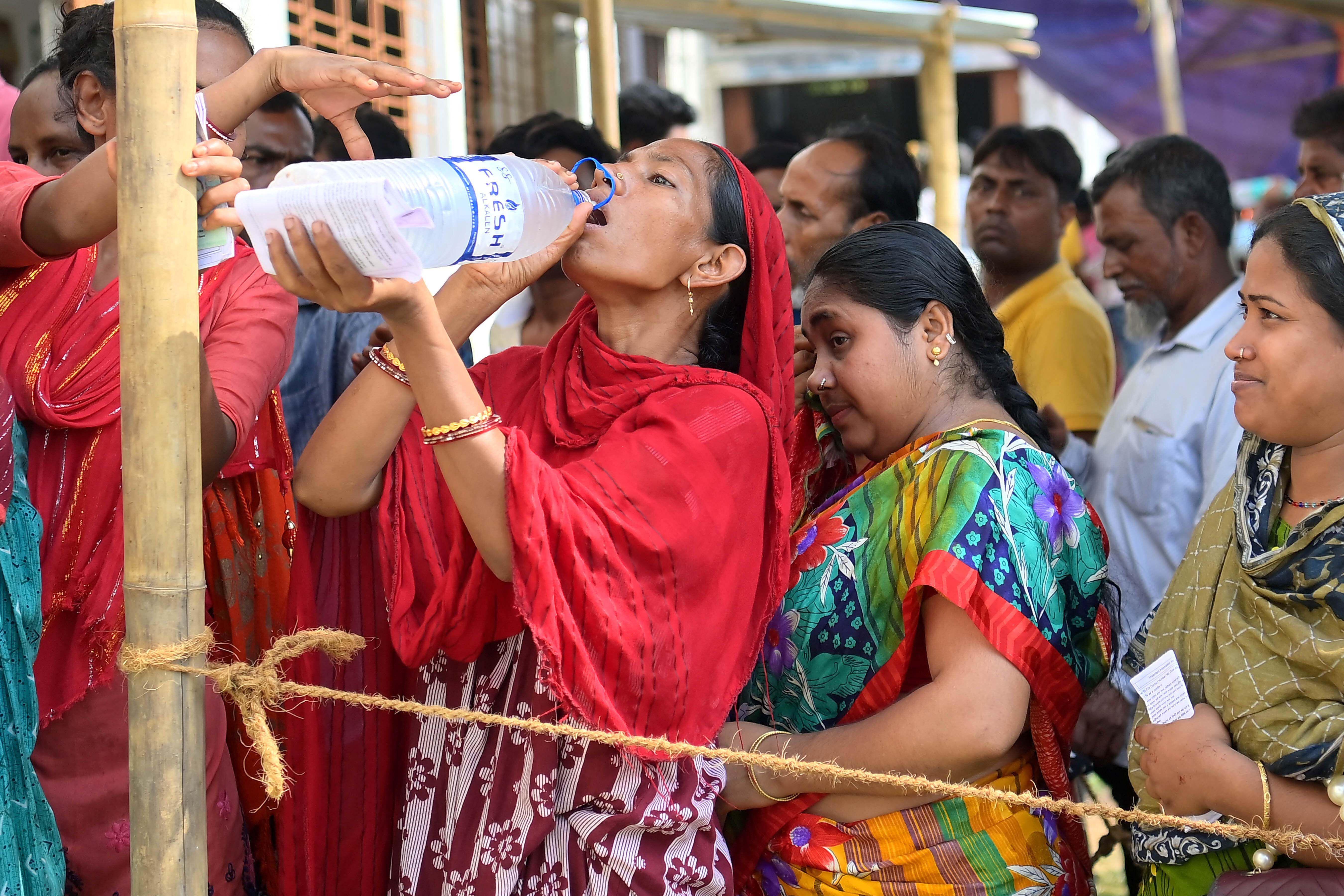
I then went beyond the campaigns to polling day itself documenting how the average voter struggled to exercise their most fundamental right in brutal conditions. And this is not India's problem alone. It is a rising concern, globally.
Together, the two stories ask a question democracies can no longer dodge: How much longer can we keep holding elections in heat that is threatening everyone involved in the process?
♨️ HOT OFF THE PRESSES
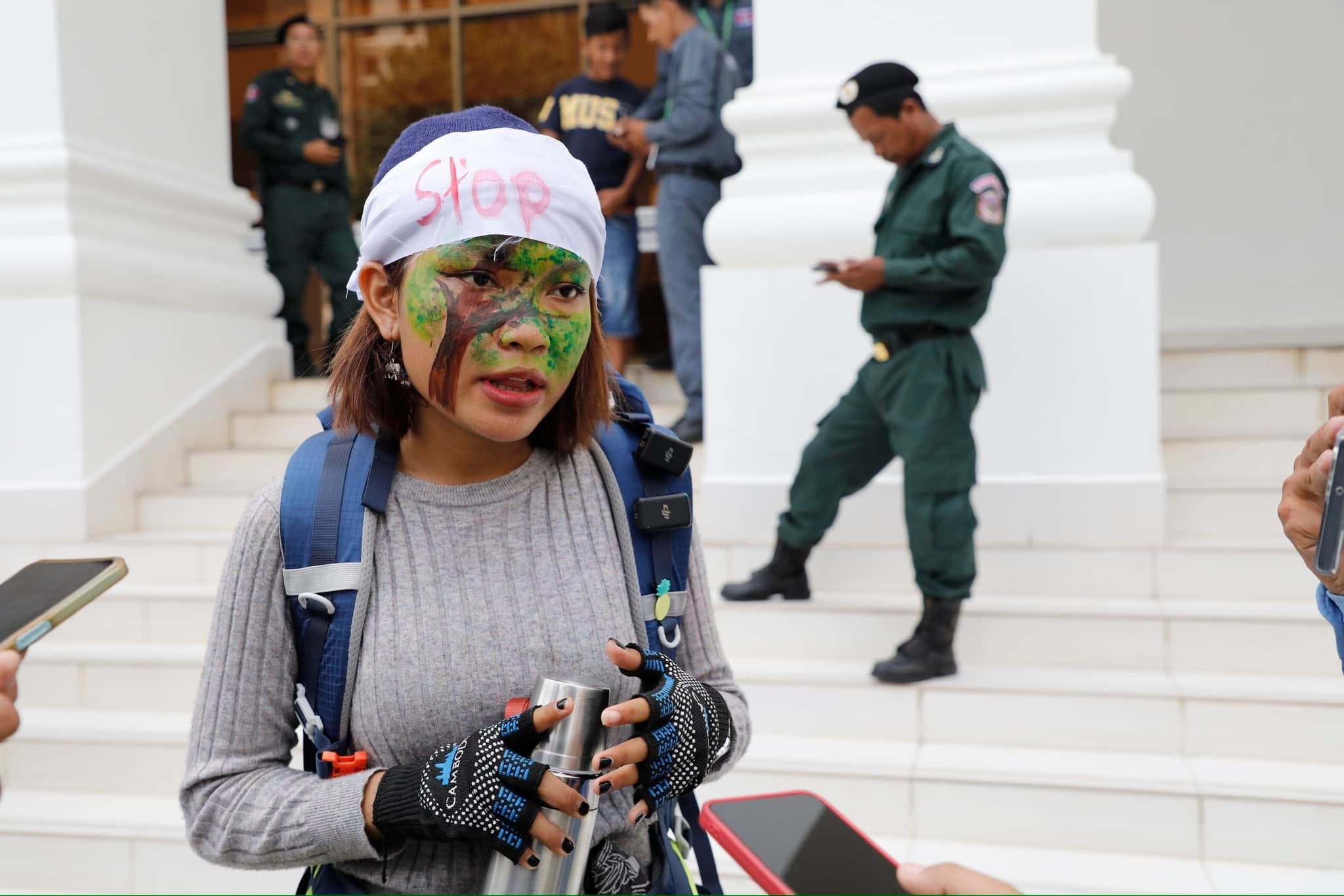
In Cambodia, the State Claims Forests. But People Push Back
What happens when Cambodian activists stage a peaceful protest against the government’s privatization moves? They risk landing in jail. And journalists who expose the regime? Many have been chased out or denied entry into the country.
This story is produced by The Xylom and co-published by Mekong Independent. Read more here.
Democracy, Meet Extreme Heat: The End of Summer Elections?
Across India and beyond, voters are being asked to go to the polls in dangerously high temperatures, with democracy as well as their health at risk.
This article is a collaboration between The Xylom and Dialogue Earth. Read more here.
Like this newsletter? Share it with a friend and subscribe below!
Subscribe now✨ NEWS BEHIND THE NEWS
🐖 Thank you to all of you who have stepped up during our #GiveInMay fundraiser so far. Shoutout to our new supporters Karolina Brocka, Ammar Yassir, Bill Davis, Melissa Pelczynski, Kari Wenger, Eveline Ferretti, Mary Ellis, Tyler Hall, Tucker McKnight, Renee Reese, and three more readers who wish to remain anonymous!
As of noon ET today, we are 13.6% of our $6,500 goal. Make a donation here to keep us in the hunting for additional prizes.📚 Celebrate Asian American, Native Hawaiian, and Pacific Islander Heritage Month with us; check out our staff-curated reads on our Bookshop featuring Ed Yong, Karen Hao, Alice Wong, Atul Gawande, Joseph Lee, and more!
📢 ICYMI: Are your aunties and uncles on WhatsApp? Share with them our WhatsApp channel so they can get our daily text updates.
🍑 A SOUTHERN FLAIR
CALHOUN, Ga. — Georgia officials watched, waited as carpet mills polluted water with toxic chemicals (Dylan Jackson, the Atlanta Journal-Constitution, Jason Dearen, Associated Press, and Justin Price, the Atlanta Journal-Constitution)
“It remains our goal to hold those that contaminated our water supply with PFAS responsible for all past, present, and future costs associated with removing their PFAS contamination from our drinking water,” Calhoun Water and Wastewater Director Erik Henson wrote in an email.
ATLANTA — Habitat for Humanity is developing a new Atlanta community with help from the Carters’ initiative (Emilie Megnien and Glenn Gamboa, Associated Press)
“The gap between what a family can afford and what it costs to create that unit of housing is the widest it has been in modern history,” said Jonathan Reckford, CEO of Habitat for Humanity International.
Drought Turns Southeastern US Into ‘Tinderbox’ as Wildfires Rage (Kiley Price, Inside Climate News)
“Fire lit up a patch of woods. The charred ground radiated heat. Stiff winds blew ash in the air, and with every breath, my lungs burned. This fire was just one of the 1,030 that have broken out in North Carolina this month, as the state’s historic drought has deepened. It rained three days later, but the quarter-inch barely wet the topsoil,” says North Carolina reporter Lisa Sorg, who recently witnessed a fire firsthand.
Hurricane Helene shattered lives — and the systems that keep people sober (Katie Myers, Grist and The Assembly)
“When you factor in a disaster like Helene or other flooding where infrastructure is really impacted, we’re just amplifying that existing barrier a billion-fold,” said Erin Major, a doctoral candidate in health services research at Boston University who studies substance misuse in Appalachia. “It became genuinely impossible for quite a few of these patients to access their care.”
🗺️ WHAT ELSE WE'RE READING
The Trump Administration Aims to Penalize Disabled Adults Who Live With Their Families (Eli Hager, ProPublica)
Protecting the SSI program from such a fate is “about how the faithful will be judged, and our care for the most vulnerable,” said Galen Carey, vice president of government relations for the National Association of Evangelicals and himself the father of a 35-year-old son with Down syndrome who lives at home and receives SSI.
A Treasure Trove of Cambrian Fossils Rewrites the Story of Early Life (Marlowe Starling, Quanta Magazine)
“As we discovered more and more animal species in the field and in our lab, we were surprised by the extraordinary diversity of this soft-bodied biota,” said study author Han Zeng, head of the Chengjiang Paleontological Station and a paleontologist at the Chinese Academy of Sciences.
How a false deep-sea mining claim fooled a prominent magazine (Marc Fawcett Atkinson, Canada’s National Observer)
“But a minute of internet sleuthing revealed everything in the article was false. The "breakthrough" it described never happened, and the academic article, supposedly published in the (real) academic journal Frontiers in Marine Science, doesn't exist,” writes Marc Fawcett Atkinson.


Add a comment: