
Mourning in Kenya On July 4th
Dear Reader,
When Alex commissioned me to report on the planned American Ebola quarantine facility in Nanyuki, central Kenya, my gut reaction was solidly mid. I’d been stuck in the middle of too many projects, desperately wanting to clear the decks so I could go on holiday with a relatively clear conscience. Then again, I know myself: I’ve never been particularly good at saying no to a new story.
I texted Michael Philips, my colleague at The Wall Street Journal and probably my favorite person to work with in the world, laying out the trade-offs.
“Ebola is just grim. I don’t want to cover it,” I told him. “But of course, I also know this is one of the defining stories of our time. Should I be interested out of a sense of obligation, at least?
“I feel the same way,” he replied.
I stalled on covering this story for a week, but then realized we'd be passing through Nanyuki en route to a dirtbag climbing trip in Samburu, northern Kenya. I convinced my friends to take it easy in Nanyuki while I slipped away for a few hours of reporting.
As a reporter, I try to strike a balance between doing my research beforehand and avoiding conclusions about the exact trajectory of the story. But when I reached the one-room mabati shack of Lucy Kagure, whose 17-year-old son Sylvester had recently been shot dead by Kenyan police during a protest, it became clear the story was as much about Kenya's deepening police brutality as it was about the proposed Ebola facility.

This phenomenon is entrenched in colonial and institutional legacies, where police operate as occupation forces serving the elite rather than the public, while also being shaped by contemporary politics. From his role as deputy president in signing the 2015 Kenya-U.S. biosecurity agreement to his current administration, President William Ruto has overseen a system critics say encourages police to shoot protestors.
The absurdity of building an isolation facility in Kenya for American citizens who might hypothetically contract Ebola — even though Kenya has no cases and the outbreak is in the Democratic Republic of the Congo, two countries away — cannot be overstated. As an American passport holder, it's another addition to a growing list of things I find embarrassing.
Not only does this reinforce the monolithic “Africa is a country” mindset, but it also reveals how out of touch the American government is. I cannot imagine a scenario in which any American citizen would want to be quarantined in Kenya — not just Nairobi, but Nanyuki — a town not exactly known for cutting-edge healthcare or technology.
Speaking to Kagure, still visibly in shock over her son's killing and lacking the means to properly grieve given her precarious circumstances, was another reminder of how successfully those in positions of power have detached themselves from the realities of the citizens they purport to serve.
Warmly,
Kang-Chun Cheng
Editor-at-Large
🔥 HOT OFF THE PRESSES
EXCLUSIVE: Kenya Has No Ebola. But Trump’s Planned Quarantine Facility Has Already Claimed Its First Life
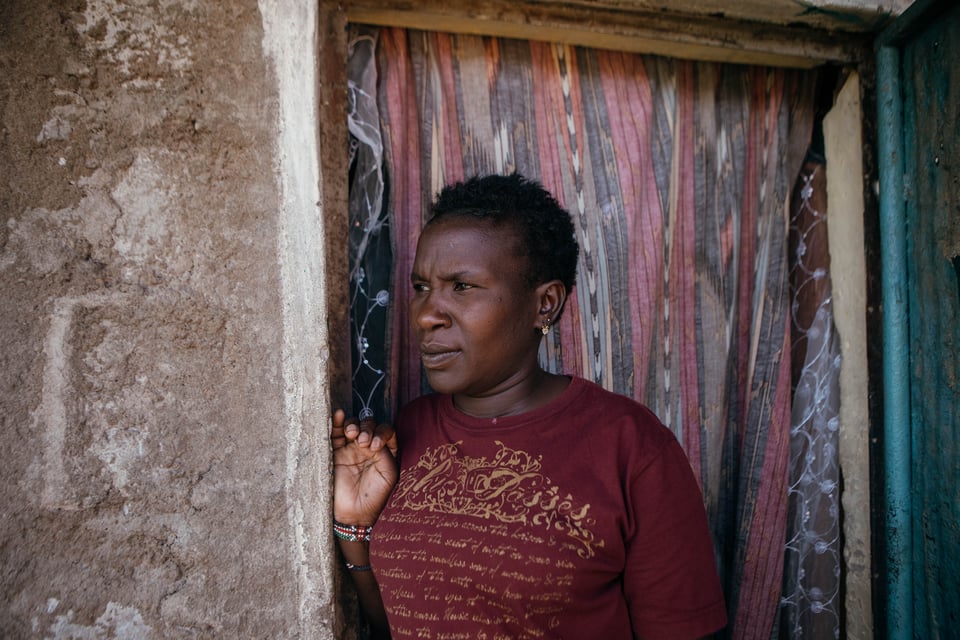
Kenya has never had a documented Ebola case. However, a planned quarantine facility exclusively serving Americans exposed to the virus in Africa has sparked massive protests, leading to a violent police crackdown.
“Why is America coming to Kenya, just because [President William] Ruto is given money by the U.S. government?” asked Lucy Kagure, the mother of a killed protester. “Why can’t the facility be in America?” Read more here.
Like this newsletter? Share it with a friend and subscribe below!
Subscribe now✨ NEWS BEHIND THE NEWS
🌾 From the rural fringes of Bengaluru, India's tech capital, our Managing Editor Laasya Shekhar reports on how a proposed AI township threatens the livelihoods of more than 16,000 farmers. Check out the story for The Quint here.
📢 ICYMI: Are your friends and family on WhatsApp? Share our WhatsApp channel so they can get our daily text updates.
🍑 A SOUTHERN FLAIR
North Carolina, the Wild West of Hemp (soft paywall)
(Jeffrey Billman, The Assembly)Dustin Brauns, vice chair of the industry advocacy group Cultivating Breakthroughs in Healthy Development (CBHD), argued that retailers have been targeted by cops who “go rogue and go wild” and “make up their own assumptions of what laws mean” to “make business owners criminals.”
But law enforcement officials say they have few tools to combat what they view as a growing public health crisis. Since hemp became legal, cannabis-related emergency department visits among North Carolina youths have risen by almost 1,000%, according to data obtained by The Assembly.
Both sides agree on the underlying problem: The state’s hemp market has no rules.
JENKINSVILLE, S.C. — Troubles arose at SC nuclear plant after workers failed to inspect safety equipment (paywall)(Sammy Fretwell, The State)
Ed Lyman, the director of nuclear power safety at the Union of Concerned Scientists, said the V.C. Summer findings are worth paying attention to – particularly now.
The NRC, he said, has in recent years become more lenient on nuclear plants, changing some white findings to green. There are increasing efforts across the country to bolster the country’s nuclear energy capacity to meet future demand.
So “when they stand their ground and do issue white findings, it is more significant than it used to be,’’ said Lyman, who wrote a paper last year criticizing changes in the NRC’s enforcement efforts. “ It means they really do have a concern that can’t just be buried.’’
ROANOKE, Va. — A decade ago, Roanoke leaders took a chance on a new way of helping people with addiction. Today, the Hope Initiative serves nearly 1,000 people a year. (Emily Schabacker, Cardinal News)
A turning point came when [then-Roanoke Police Chief Chris Perkins] had to tell a mother that her son had died from an overdose. He began to wonder what might happen if some of the time and resources devoted to drug enforcement were redirected toward helping people access treatment and healthcare.
“Think about the time spent dealing with addiction when you could be out here addressing some of the other things that really need our focus, like violent crime,” Perkins said.COVINGTON, Ga. — Georgia’s first data center ‘pop-up’ power plant is breaking rules, groups say (Drew Kann, The Atlanta Journal-Constitution)
Amid the rush to train artificial intelligence systems, on-site power is becoming an increasingly appealing option around the country to meet data centers’ huge electricity needs quickly. But in other states, projects like VoltaGrid’s have raised concerns about pollution and tech companies’ seeming disregard for the regulatory process.
🗺️ WHAT ELSE WE'RE READING
Will betting on wildfires lead to arson? (Kylie Mohr, High Country News)
People spent $1.2 million betting on these queries, according to Aeon Magazine. “Wow,” [Sylvia Andrews, who lost her house in the 2025 Eaton Fire] said repeatedly when she learned the figure. “My first take is that it’s morally reprehensible,” she said. “The fact that someone would feel OK doing that flabbergasts me.”
Why carbon capture and storage won’t fix our climate crisis (Reporting by Katie Worth and Lucas Waldron; illustration and animation by Case Jernigan; design by Anna Donlan of ProPublica; additional reporting by Amy Westervelt and Maddie Stone of Drilled)
“An investigation by ProPublica and Drilled has found that boosters of CCS have ignored evidence of the technology’s limitations, or overstated its potential, and convinced the world it could be effective,” the authors wrote.
AL-MANSOURI, Lebanon — Mona Khalil, Who Devoted Her Life To Protecting Turtles, Killed By Israeli Airstrike (Sabrina Imbler, Defector)
Khalil spent years fighting for a world where no individual should be displaced from their home, and her legacy lives on in the people and turtles who will return to the beach despite certain peril, who labor to shield the lives of those yet to be born.
‘This is an unhealthy environment’: Arctic researcher Li Xueke leaves the US for Hong Kong (Holly Chik, South China Morning Post)
“The opportunity for us to do climate science is less than before. It is very hard … especially for us running computational, state-of-the-art climate models. We need funding to make this flow work,” says climate scientist Li Xueke.
Trump’s Sons Stand to Profit From the Critical Minerals Arms Race (Sophie Hurwitz, Mother Jones)
“I can see how the optics might be disturbing to some people,” Pini Althaus, the CEO of Kaz Resources, said. “But that’s unfortunate because this company and this project goes way beyond any one president, let alone any family.”


Add a comment: