
The Necropolitics of Oil
Dear Reader,
Happy Hump Day! Here are the top stories on the world’s most pressing health and environmental disparities. Let’s get into it.
Best regards,
Alex Ip
Publisher and Editor
🗞️ ICYMI: Africa’s Longest Crude Oil Export Pipeline Isn’t Just Taking Indigenous Land, It Is Disturbing the Dead
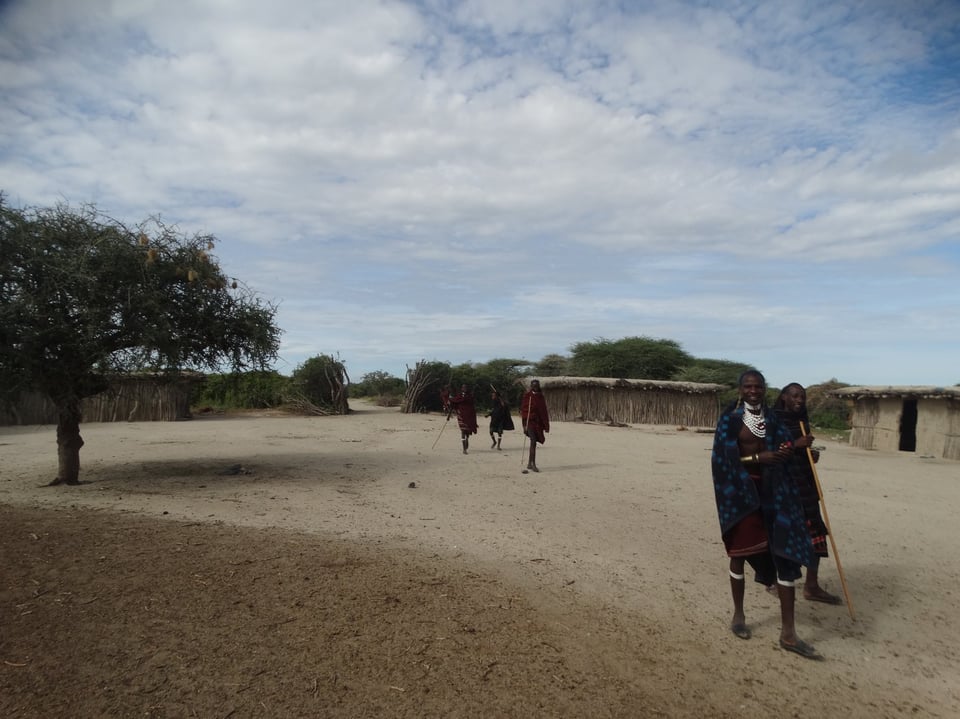
Indigenous communities say burial sites are being disturbed by the East Africa Crude Oil Pipeline (EACOP) project in Uganda and Tanzania, and compensation is not adequate to move graves.
“It is unheard of in our culture to exhume a dead body,” said 45-year-old Ike Emoilit, a member of the Maasai. “But they refused to listen to our pleas.”
This story was first published by Drilled. Read more here.
🍑 A (GLOBAL) SOUTHERN FLAIR
HOUSTON — Health Care Agency Discontinues Dozens of Active Research Awards (Katrina Miller, The New York Times)
“A lot of research from N.I.H. happens in academic medical centers,” said Dr. Sebastian Tong, a researcher at the University of Washington. “A.H.R.Q. was the final bridge bringing it to the public, especially in remote communities.”
KINGSTON, Tenn. — Cleaning up the largest industrial disaster in US history (Matt King, Talking Trash Podcast)
Made in Spain: Surveillance tech banned in EU booms in India (Nicole Schmidt, Investigate Europe, Mayank Aggarwal, The Reporters’ Collective, and Ignacio Carrascón, InfoLibre)
“The fact that surveillance technologies banned in Europe are being exported and deployed elsewhere, such as in India's railway stations, exposes a dangerous double standard.”
— Brando Benifei, Italian Member of the European Parliament
BANTARGEBANG, Indonesia — As Indonesia cuts methane emissions, life atop a mountain of garbage begins to change (Niniek Karmini and Andi Jatmiko, The Associated Press)
PACIFIC OCEAN — Dark waters: The dangerous world behind your can of tuna (Jennifer Scherer and Ronald Toito'ona, SBS News)
Like what you read so far? Subscribe and share it with a friend:
🗺️ WHAT ELSE WE'RE READING
VANCOUVER — In a bid to transform Canada’s drug laws, Vancouver activists risk life imprisonment (Stephanie Harrington, The Breach)
DJ Larkin, a lawyer and the executive director of the Canadian Drug Policy Coalition, also hopes the DULF case will result in a legal pathway for compassion clubs. “We need to be prioritizing safety now,” Larkin said. “If governments’ concern is, ‘We don’t want people committing crime,’ and community concern is, ‘We don’t want people to die of drugs,’ the fastest way to solve that problem is to divert people toward a compassion club.”
THOMPSON, Conn. — What a 200-year-old Connecticut mill reveals about our energy future (Philip Bump, CTInsider)
Think of any of the world's great cities. The odds are good that you're thinking of a place situated along a river or coast. Nowadays, the rivers are often used as attractions, places to go and sit and have dinner, to recreate. But that's not why the cities are there. The cities are there because rivers used to be an essential element of how a city ran. Rivers provided navigation and routes for commerce. But rivers also provided power.
EAST SELAH, Wash. — U.S. military bases delay cleanup of toxic "forever chemicals" (Austin Fast, USA TODAY)
“This beautiful dream of raising your babies at the end of a sweet cul-de-sac with all these nice old neighbors,” Hyatt said, pausing. “To find out that dream is potentially killing you, it’s just really hard.”
How Trump’s “America First” Administration Could Shut U.S. Scientists Out of the Next Nobel-Worthy Discovery (Lisa Song, ProPublica)
“The United States built the greatest scientific enterprise in human history on a simple idea: fund the best ideas, chosen by the best experts, and get out of the way,” [University of Chicago physics professor David W. Miller] said in his public comment. “This proposed rule dismantles that principle entirely, and it does so in ways that will cause immediate, concrete, and in many cases irreversible harm to American science.”
EPA exempts data center power plants from pollution limits seeking to prevent acid rain (Rachel Frazin, The Hill)
NORTHEASTERN MINNESOTA — ‘We were shovel-ready’: A Minnesota forest hit by DOGE cuts is now ablaze (Brianna Sacks, The Washington Post)
DETROIT — Detroit once had outdoor pools across the city. Now, there’s just one — and it’s closed this summer (Briana Rice, Outlier Media)


Add a comment: