
Reporter’s Diary: Bats No Longer Disgust Me
Dear Reader,
When I arrived in Maiduguri, northeastern Nigeria, for a reporting assignment in late January, I did not expect fried grasshoppers to become the starting point for my next assignment.
Women were openly frying the insects and selling them as snacks. My first reaction was disgust. But after locals persuaded me to add lime and dry ground pepper, I eventually tried them. Surprisingly, I got used to the taste. I later researched their nutritional value and found evidence that grasshoppers are indeed rich in protein.
That experience left me with another question: if people eat grasshoppers, what other animals are being consumed, and what happens when wildlife enters the human food chain?
Bushmeat consumption and wildlife poaching are widespread in Nigeria, and I had encountered different forms of it in Lagos, Abuja, and elsewhere. I became interested in the potential public-health implications, particularly because some wild animals can carry pathogens capable of infecting humans. I pitched the broader idea to The Xylom, hoping to explore what this could mean for Nigeria and beyond.
🦇 ICYMI: Bats Traded for Traditional Medicine Put Nigeria at Risk of Zoonotic Disease Transmission
This story is produced by The Xylom and co-published by Sayansi Magazine, a Kenya-based science magazine published by the Media for Environment, Science, Health and Agriculture (MESHA). Read more here.
Laasya, The Xylom’s Managing Editor, saw potential in the idea but helped me narrow it. She suggested several possible animals, including monkeys, chimpanzees, and bats. I eventually chose bats partly because they had been part of my own childhood experience.
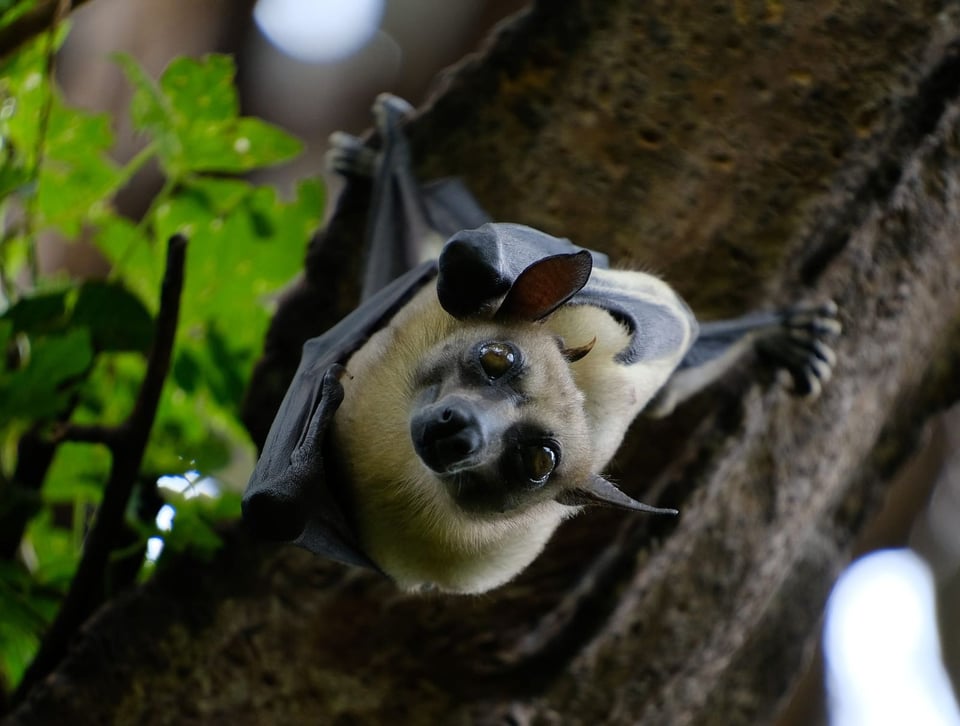
There was an almond tree opposite our house when I was growing up, and bats sometimes flew around it at night. We found their appearance frightening and disgusting. It was definitely Chiroptophobia. When they accidentally swooped near us, we killed them and threw them away, without thinking about what role they played in the ecosystem.
In a 2021 research paper titled Bane or Blessing? Reviewing Cultural Values of Bats across the Asia-Pacific Region, researchers reviewed 119 cultural values associated with bats across 60 cultures in 24 countries. They found an enormous range: bats can be seen as sacred, lucky, useful, frightening, associated with death, or associated with spirits.
This time, however, research and conversations with experts began changing my perception. The more I learned, the more determined I became to report the story.
Finding bats for sale proved unexpectedly difficult. A bushmeat seller directed me to traders in traditional-medicine ingredients, where I visited about four shops and spoke with a trader. What I found there shifted the story again: this was not simply about people selling dead bats. It pointed to a much wider question about how wildlife enters Nigeria’s informal markets, and how effectively those markets are regulated.
On a personal level, I am no longer disgusted by bats. In fact, I have come to admire them — the guardians of sacred groves and the farmer’s friends, helping control pests and protect crops.
Warmly,
Abdullahi Jimoh
Contributor
🏭 A Major Disappearance: America’s Air Monitors — and Your Power to Expose Polluters
Across Louisiana, Kentucky, Ohio, and West Virginia, a quiet chemical industry campaign is making it harder to hold polluters accountable.
This story is produced by Floodlight, a nonprofit newsroom that investigates the powers stalling climate action. Read more here.
🌞 NEWS BEHIND THE NEWS
🌏 Congrats to our alum Gobinda Pokharel, who has been appointed as a member of the IUCN Climate Action Commission (CAC) and the IUCN Commission on Education and Communication (CEC) for the IUCN 2026–2029 term!
📖 Are you a book lover? Check out our staff picks on Bookshop; any purchase you make will directly support our reporting!
LOVE this newsletter? The best way you can support our independent reporting is to share it with a friend. Join our community now:


Add a comment: