
How Violence Helped A Turtle Species Cling to Life
This past Friday was World Environment Day. Our managing editor reflects on a critically endangered turtle whose survival reveals uncomfortable truths about humanity.
Dear Reader,
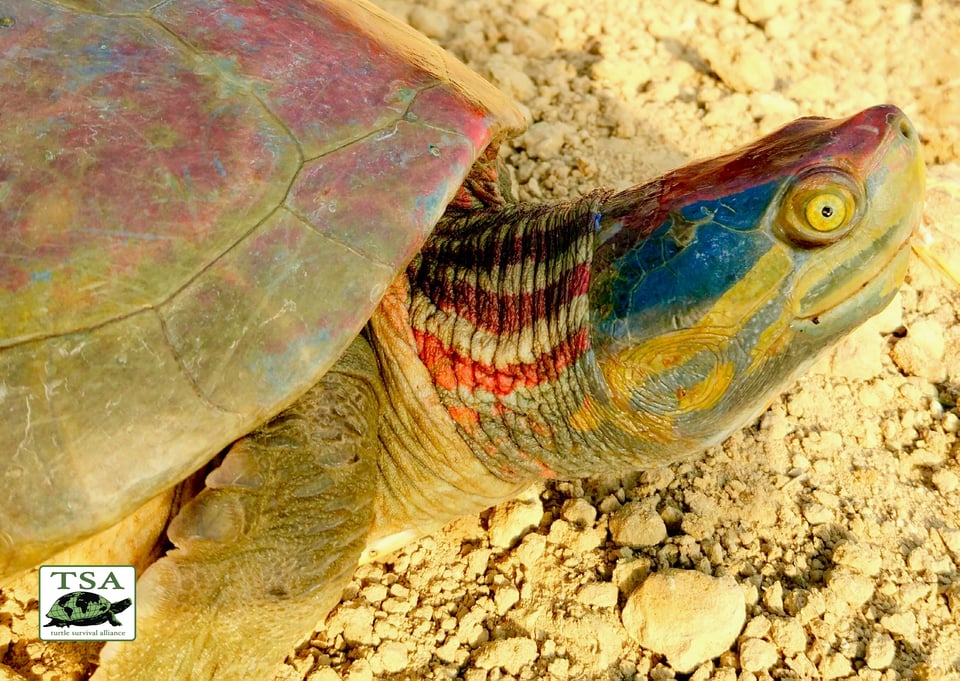
The critically endangered red-crowned roofed turtle (Batagur kachuga), often called the jewel of the Ganga, is by far the most beautiful male I have ever seen — humans included, with my husband being the sole exception.
During the breeding season, the male turtle is a mosaic of colours, with reddish-orange folds of skin along the neck, pale yellow irises, and a blast of blue, yellow, and red across its head.
Once found across the 400,000 sq km expanse of the Ganga river basin, the species is now largely confined to the Chambal river system. Do you know why?
The Chambal Valley, spanning three Indian states, was once an epicentre of dacoity. Its maze of ravines housed outlaw gangs, while caste discrimination, land disputes, and poverty sparked violence.
It was a place where retaliation plots and robbery plans were always brewing, as gangs survived on extortion, kidnapping, and loot. This fear kept human settlements at bay and left much of the region free from encroachments and pollution, creating a favourable habitat for Batagur kachuga. The Chambal is not revered in the same way as the Ganga and Brahmaputra, and therefore escaped some of the ritual pressures.
These turtles were heavily poached for their eggs and illegally traded as pets, despite their important role in the environment as natural scavengers, nutrient recyclers, and seed dispersers.
Today, around 1,000 turtles are found in the Chambal River system. Over the years, conservationists have documented female turtles, hatchlings, and nests, signs that the species is holding on in the wild.
This story makes me wonder: do some species thrive only when humans fail to leave a mark?
Warmly,
Laasya Shekhar
Managing Editor
🔥 HOT OFF THE PRESSES
EXCLUSIVE: Climate-Induced Floods Wash Away USAID-Abandoned Mozambique’s Efforts to Eliminate Trachoma
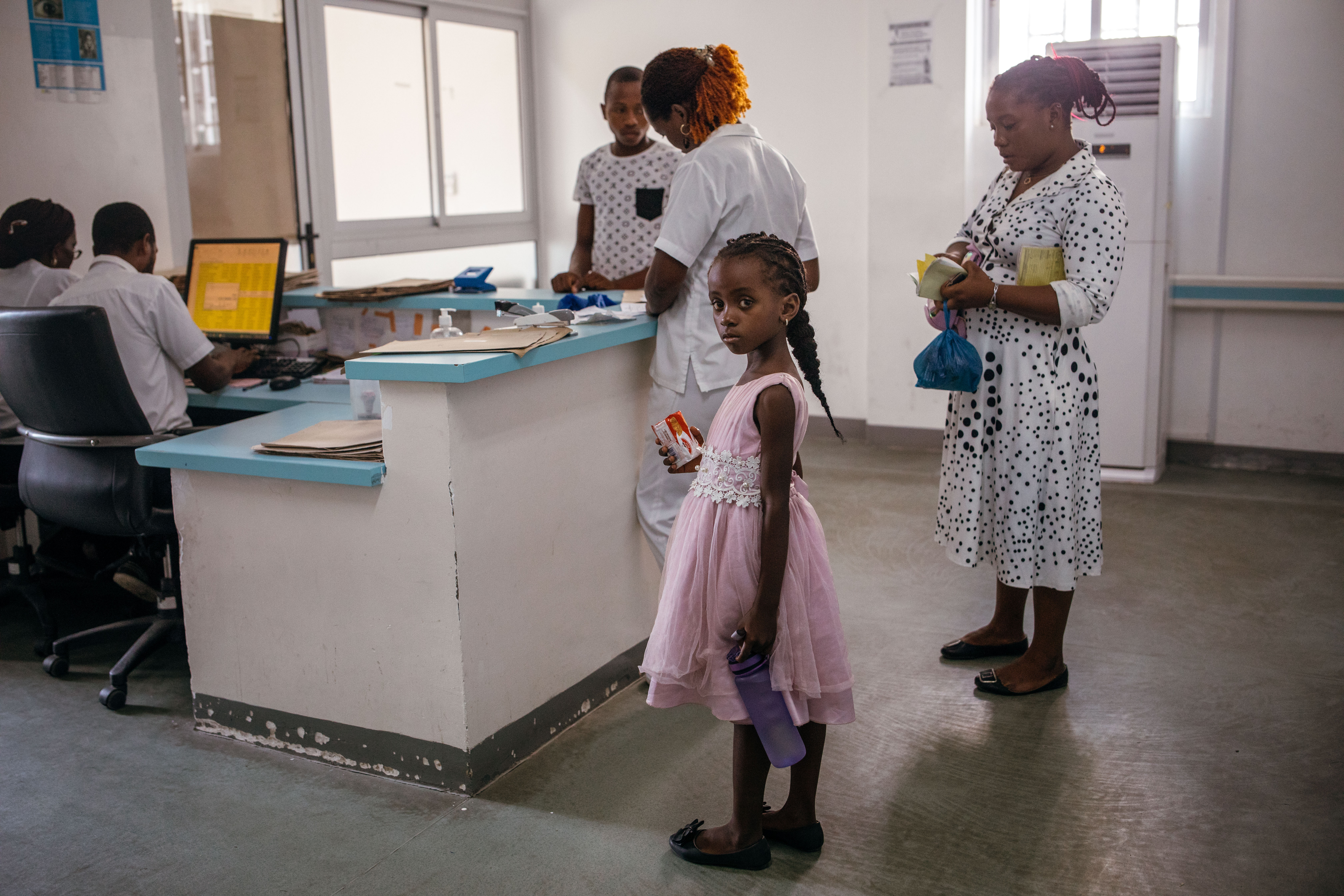
Before Trump dismantled USAID, Mozambique had been battling hard-to-eliminate trachoma, an eye disease that causes blindness, especially among children. Now, a lack of stable funding and clean water — critical for preventing transmission, but hard to find among the wreckage caused by climate-induced cyclones and flooding — threatens to reverse the country’s modest progress.
This story is produced by The Xylom and co-published by Mekong Independent. Read more here.
‘We Didn’t Name It A Better World Is Probable’: Meera Subramanian on Hope in A Climate Crisis
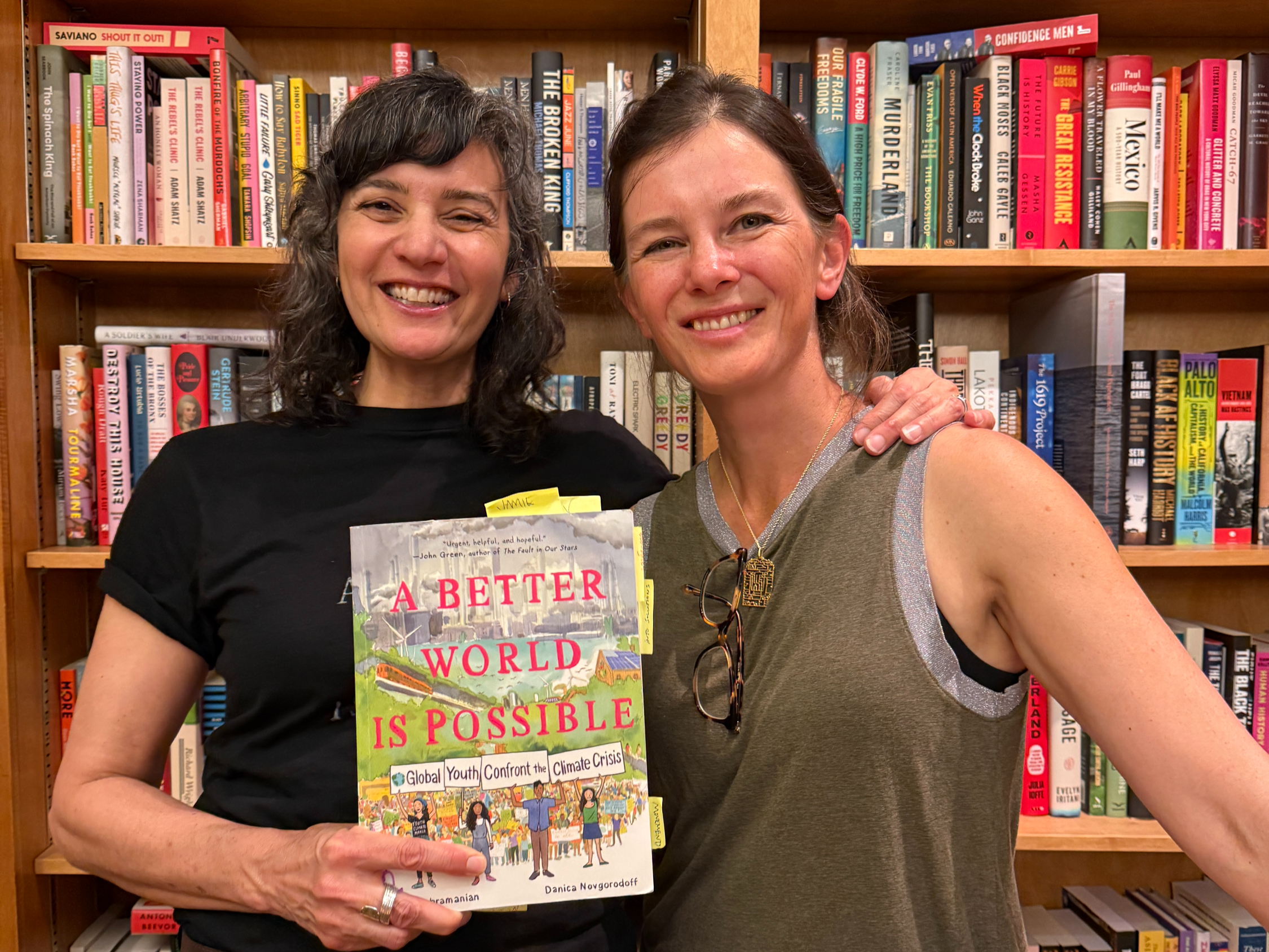
In an interview with The Xylom, climate journalist Meera Subramanian reflects on a new graphic nonfiction book she co-authored, A Better World Is Possible: Global Youth Confront the Climate Crisis, and what gives her hope in the face of a warming world. Read the Q&A here.
Like this newsletter? Share it with a friend and subscribe below!
Subscribe now✨ NEWS BEHIND THE NEWS
🖊️ Please join us in welcoming Zoe Beketova, our summer Editorial Intern!
From Moscow and London, Zoe is wrapping up her time at the MIT Graduate Program in Science Writing, with past stops at University College London and Yale University. (Longtime readers may remember Zoe’s past reporting for us on Connecticut’s psychosis treatment crisis.)
A developmental neuroscientist by training. She is eager to sharpen her investigative skills and write about science policy, especially concerning AI governance and global health.🌏 Check out this new story by our contributor Pragathi Ravi, “If Local People Thrive, Biodiversity Thrives”, for our colleagues at Earth Island Journal!
🎓 Congratulations to our fact-checker Amber Chen, who just graduated from UC Berkeley and will attend the MIT Graduate Program in Science Writing!
🍑 A SOUTHERN FLAIR
ATLANTA — World Cup fans will face Atlanta heat. Emory doctor shares how to stay safe. (Laura Berrios, Atlanta Journal-Constitution)
“When you plan these kinds of events, and you know there’s going to be heat and humidity, it’s critically important that there be plenty of opportunities to hydrate,” said Dr. Alexander Isakov, an emergency physician at Emory University Hospital.
MCALLEN, Texas — First U.S. screwworm case confirmed in South Texas (Berenice Garcia and Ayden Runnels, The Texas Tribune)
“If this case is confirmed I will stand lockstep with every local, state and federal agency to work together and fight this horror,” says state Rep. Don McLaughlin.
NEW ORLEANS — Holding Ground (Shannon Dosemagen, Project Muse)
“In late 2024, I found myself wondering if this year felt different. I kept scanning the headlines, feeling the friction and heat build beneath our already thin seal of protection. The threats didn’t arrive in isolation,” writes Shannon Dosemagen.
“They quickly converged: climate change, a newly emerging federal retreat from science following Trump’s January 2025 inauguration, an unraveling insurance industry, and the subsequent erosion of our social infrastructure as people became further dislocated from home.”
🗺️ WHAT ELSE WE'RE READING
KENYA — When Ebola Struck, America Turned to Kenya. Reasons Go Back 80 Years. (Sheila Sendeyo, Defrontera)
East Africa […] is one of the world’s most important areas for infectious disease research because it combines three factors that facilitate the emergence and spread of infectious diseases: high pathogen diversity, large human and animal populations, and climatic conditions favourable to tropical diseases.
So, in 1968, the United States established NAMRU-3’s East African Detachment in Kenya.
Science and Immigration Are Interconnected: On Higher Education, ICE, and the Assault on DEI (Gretchen Goldman, Union of Concerned Scientists)
“The Trump administration’s unlawful and cruel crusade against immigrant communities has involved Immigrations and Customs Enforcement (ICE) using racial profiling tactics and violently terrorizing people in the streets—particularly Black and Brown people,” writes Gretchen Goldman, President and CEO of UCS.
“The administration claims they are going after criminals, but innocent people—including scientists—are getting caught in their dragnet.”
‘Dot-com boom’? Companies are lining up to mine the deep seas (Hannah Northey, E&E News by Politico)
“It’s like during the dot-com boom and trying to predict which of those companies were real and which of those companies were nonsense. It’s kind of impossible until you see who actually survives until the industry is mature,” said Andrew Thaler, a deep-sea ecologist and CEO of the environmental consulting firm Blackbeard Biologic.
Nonfiction as a Choice: An Interview with Lydia Millet (Lisa Wells and Lydia Millet, Orion Magazine)
“Say we’re urban people and we don’t leave the city very much—still, the idea that there are forests out there that might be roadless, with unexplored reaches…this is another subject, maybe, but the existence of wildness is important to many of us,” says Lydia Millet, author of We Loved It All.
“Just the existence of it, even if we don’t identify as nature people. The notion that not every square foot is penetrated by humans is crucial to a healthy psyche.”


Add a comment: