
Take Care of Yourself and Your Sources: How To Report on Trauma
Our editorial intern shares takeaways from a trauma-informed reporting workshop
Dear Reader,
In journalism school, my professor described the topics I cover as a “beat of horrible things.”
My stories almost always center on sources that require trauma-informed reporting. I’ve spoken to parents whose children have untreated psychotic disorders, political exiles who have fled their home countries for fear of murder by the state, and incarcerated people facing the consequences of decades of medical neglect and mistreatment.
In this line of work, you’re often the first and only person who is listening to someone’s story. People overshare, oftentimes very graphically, feeling heard for the first time after years of struggles. Looking after my own well-being and that of my sources is vital in these types of stories.
On June 9th, I attended Poynter’s workshop on trauma-informed reporting, led by journalists Lisa Armstrong and Marla Broadfoot.
Here are some of my key takeaways from the session:
Discuss the risk of what might happen to your source after publication. Do this explicitly and multiple times. You shouldn’t expect your sources to automatically understand what being named in the media could lead to.
Explain your reporting process in depth. Explain that reporting may take months and describe what you’ll need to know, especially if the story requires personal details. People don’t necessarily know what journalists do.
Set boundaries. Turn off message previews from sources, reply only during work hours, and ensure that you have a self-care routine to process difficult interviews. Go on a walk, take a bubble bath, look at videos of puppies: take your mind off the work in any way you like.
Be ethical about details. A particularly traumatic story might help make your writing more narrative, but consider whether you really need it and whether your source should be asked to relive it.
The relationship does not end after publication. Ensure your relationships with sources are collaborative, rather than extractive. Check up on them after publication and stay in touch.
Don’t start or leave an interview on a heavy question about trauma. Remember that your sources are whole people: ask about their happy memories, their interests, their friends, and family.
Most importantly, Lisa Armstrong reminded us that you cannot do journalism hoping that the world will change. Sometimes things will get worse. Let go of your expectations and focus on doing careful, safe, and diligent work: that’s your responsibility as a journalist.
Warmly,
Zoe Beketova
Editorial Intern
🔥 HOT OFF THE PRESSES
Why a Retired Texas Shrimper Crossed the World to Confront Asia’s Biggest Petrochemical Company
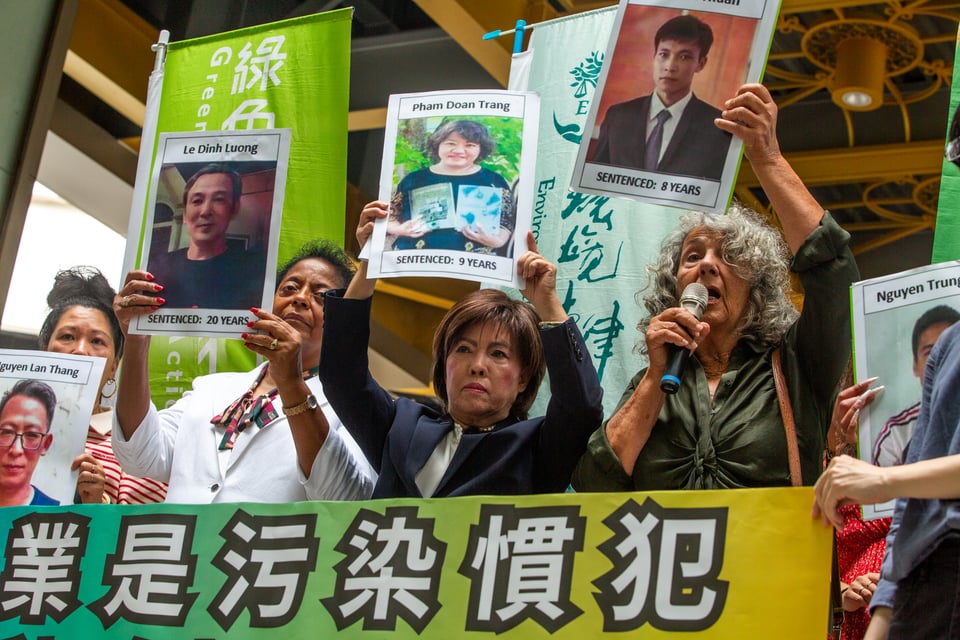
Diane Wilson, who won the 2023 Goldman Environmental Prize for her landmark lawsuit and settlement agreement with Formosa Plastics on the Texas Gulf Coast, crossed 13 time zones to confront Formosa’s leadership on its home turf, at its annual shareholder meeting in Taipei.
This story is produced by Inside Climate News and co-published by The Xylom. Read more here to learn what happened:
Perspective: The Missing Asian Americans in Natural Sciences
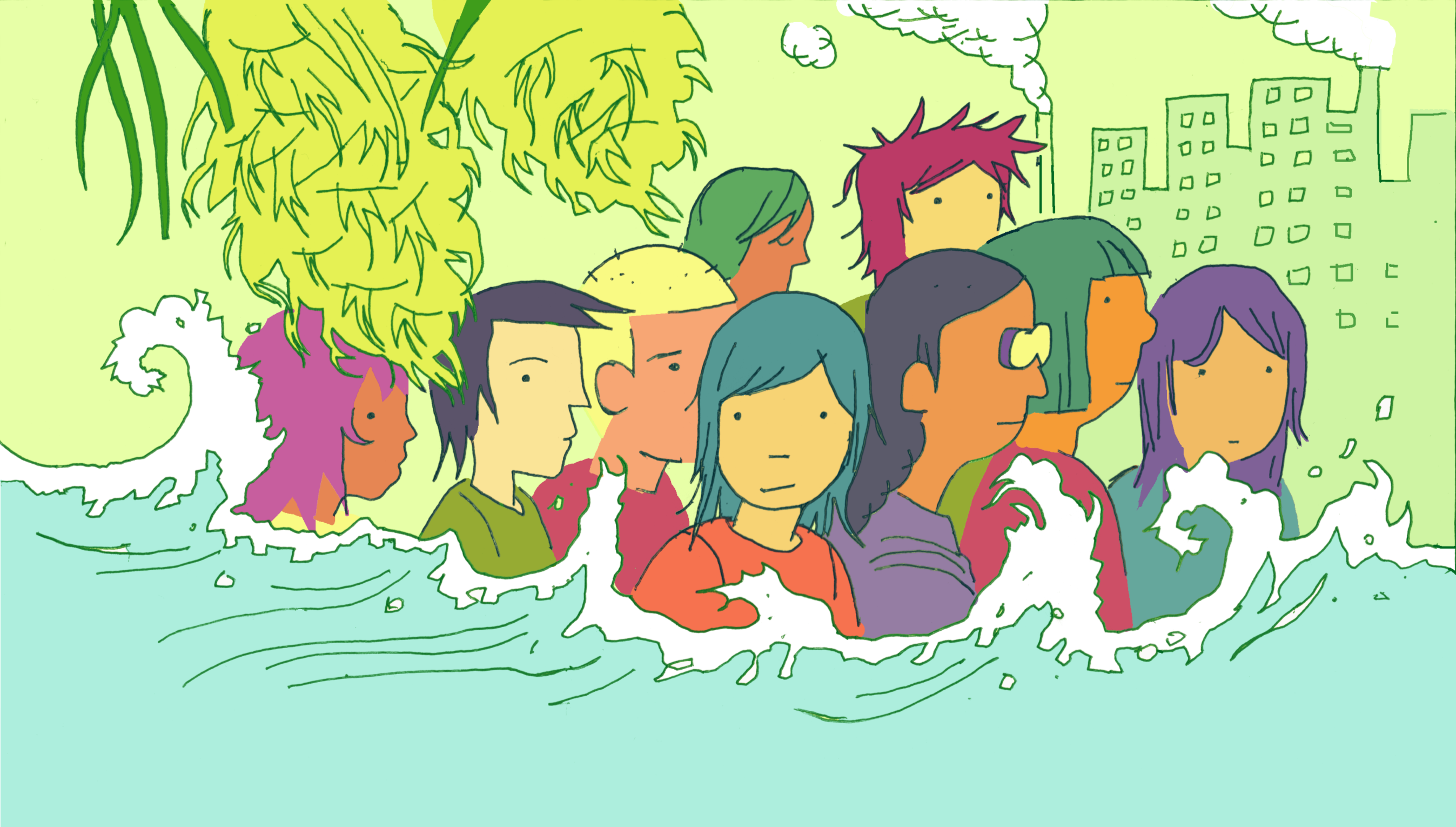
Representation is essential to environmental justice. Without it, communities of color, including Asian Americans, bear a disproportionate share of environmental harms. Having found this disparity striking, Casey Iwamoto writes about the importance of interconnectedness in nature-based careers. Read the essay here.
Like this newsletter? Share it with a friend and subscribe below!
Subscribe now🍑 A SOUTHERN FLAIR
NASHVILLE, Tenn. — Nashville Zoo tries to halt proposed data center over animal safety concerns (David Ingram, NBC News)
“I’m getting phone calls. I’m getting emails. All of my social media. Text messages. The community is speaking,” says Courtney Johnston, a member of the metropolitan council whose district includes the zoo.
NEW ORLEANS — Police remove UW diabetes researcher and other experts from conference (Elise Takahama, The Seattle Times)
[Dr. Steven Kahn, director of the UW Diabetes Research Center,] later said he wasn’t scared in the moment, and that he was “willing to be arrested.” While the officers did not explicitly say why they could not distribute the editorial, Kahn thought it was clear the American Diabetes Association was worried about repercussions from the Trump administration.
“I don’t think they’re alone,” he added. “I think all professional organizations are worried about their nonprofit status. And so bunches of them have been quieted, in my view. … This cannot carry on.”
RINGDOLD, Ga. — Welcome to Georgia, where questionable therapies flourish with little oversight (Danny Robbins, Carrie Teegardin, and Phoebe Quinton, The Atlanta Journal-Constitution)
“I realize (IPT) is not for everybody,” says Dr. Jonathan Stegall.
“But, to me, with something like cancer, we need to use all the tools we think we can use safely and effectively. That means pulling from the standard of care. It also means pulling from some alternative therapies that aren’t standard of care.”
ORLANDO, Fla. — Mass Sloth Deaths in Florida Are a Warning About Wildlife Trade and Pandemic Risk, Scientists Say (Katie Surma and Kiley Price, Inside Climate News)
Containing a pathogen once it breaks out is brutally difficult, even within highly regulated, heavily screened systems like domestic food networks that feature routine monitoring, warned Meghan Davis, a veterinarian and associate professor at the Johns Hopkins Bloomberg School of Public Health. She pointed to the ongoing spread of H5N1 avian influenza, known as bird flu, in U.S. dairy cattle as a prime example of such containment challenges.
🗺️ WHAT ELSE WE'RE READING
A researcher explains how Big Tobacco engineered Lunchables to target kids (Abby Seiff, The Examination)
“One of the most important features of Lunchables was this idea of using consumer-driven, cigarette-style product development where you embed consumer research into the actual engineering of the product.
They knew moms were feeling guilty and worried about the health impacts of giving their child a packaged food product. And so, they wrapped it up to make the packaging look like a gift. They made little transparent windows so moms could see the food. They made sure that there was a lot of familiar branding of existing Kraft cheese singles.
They also designed the product to look and feel like a toy. Both of those hallmarks of the tobacco product development strategy are still central to the brand today. In recent marketing by Kraft, it's all about showing children building little animals out of crackers and processed meat.”
MEXICO CITY — Mexico unveils the Olinia Uno, an $8,600 government-backed electric vehicle designed for city streets (Darius Popa, The Next Web)
“For a long time, people talked about how Mexico was a place only destined to produce what other people imagined,” [President Claudia] Sheinbaum told a crowd that included dozens of engineers and designers involved in the project. “Olinia is the proof that Mexico can go far beyond that.”
Astronaut Victor Glover is still trying to find the spiritual words to describe his Moon mission (Jack Jenkins, Religion News Service)
Glover encouraged his daughters to think about how someone who lived “2,000 years ago, 3,000 years ago” would describe the birth of the universe, and they noted how it echoed the Bible’s description of creation in Genesis.
“I saw my kids’ eyes light up,” Glover said. He added: “I work in science. I work in church. I don’t see them as conflicting.”
KERALA, India — No One Knows How to Handle Nurdle Spills (Kamala Thiagarajan, Biographic)
“Nurdles can act like tiny sponges for pollution, attracting toxic chemicals such as heavy metals and persistent organic pollutants onto their surfaces,” [Salom] Vincent [of the University of Kerala] says. “When marine animals ingest them, these pollutants may enter their bodies and cause harm.”


Add a comment: